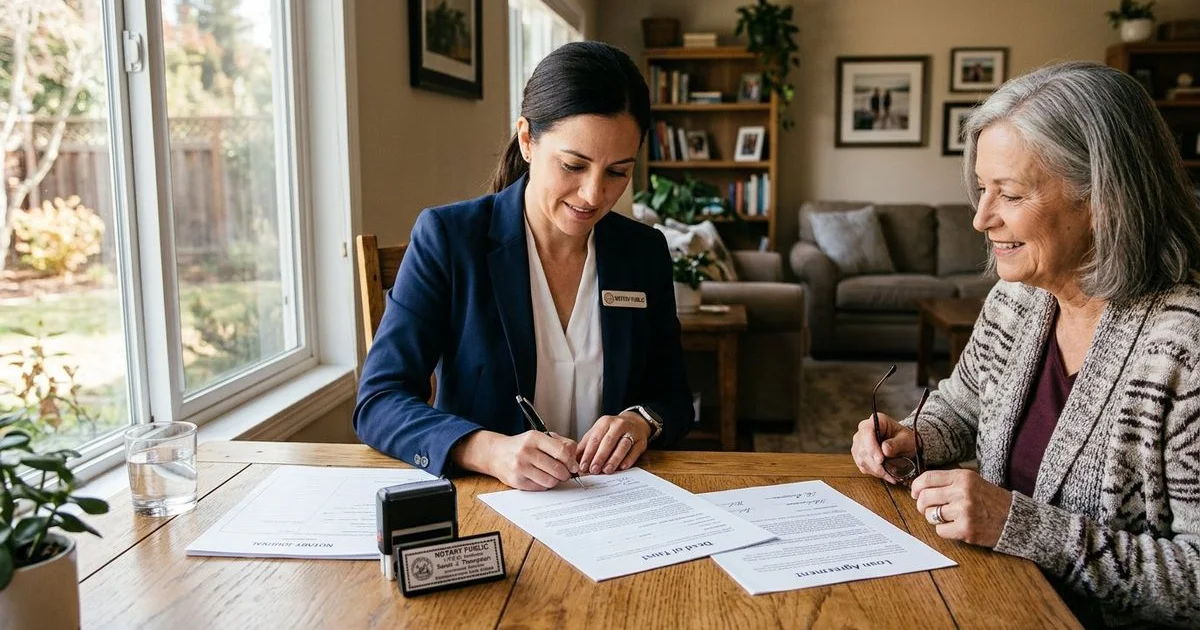
Why Your Estate Planning Documents Need Proper Notarization
Learn why proper notarization is critical for wills, trusts, and power of attorney in North Carolina. Avoid costly legal challenges.
Portia Burnett
We frequently answer questions about why your estate planning documents need proper notarization. People spend months drafting the perfect strategy, only to have a simple signature mistake invalidate everything.
That tiny oversight can freeze your entire estate.
Our professional service team handles these exact scenarios daily. Proper execution is the only thing standing between your wishes and a courtroom battle.
At Thrive Carolina Mobile Notary and Apostille Services, we provide professional estate planning notarization services across the state.
Let’s examine the specific North Carolina statutes affecting your documents, review the hidden costs of errors, and outline the exact steps required to secure your family’s future.
Notarization Verifies Identity and Prevents Fraud
North Carolina has over 95,000 commissioned notaries as of 2026. Finding one who actually understands the strict requirements of asset protection is another matter entirely. We frequently see families forced into legal battles because a previous notary failed to properly verify an ID or complete the venue section of the certificate.
The primary purpose of this process is to confirm that the person signing is acting willingly and is exactly who they claim to be. For these specific records, this verification is critical because the signer will likely be incapacitated or deceased when the paperwork is finally needed. At that point, testifying in court is impossible.
Common Pitfall: A frequent reason for rejection is a notary failing to accurately list the venue. The venue specifies the exact county where the signing takes place, such as “State of North Carolina, County of Wake,” regardless of where the document was drafted.
Our notaries rigorously check government-issued identification and assess the signer’s willingness before creating a formal record in a digital or physical journal. This creates an unbroken chain of evidence. Without this protection, disgruntled relatives can easily allege forgery or coercion.
North Carolina Requires Notarization for Key Estate Documents
Our experience shows that treating all legal paperwork the same is a massive mistake. State law dictates specific execution requirements depending on the exact form you are signing. Understanding these rules ensures your plans are legally valid from the moment the ink dries.
Self-Proving Wills
A standard Last Will and Testament requires the signatures of two competent witnesses to be valid. Adding a self-proving affidavit under N.C. Gen. Stat. § 31-11.6 makes the document significantly stronger. This affidavit is a sworn, notarized statement attached to the will where you and your witnesses confirm under oath that the execution was handled correctly.
We always recommend including this affidavit to save your family immense stress. Without it, the probate court will force your executor to locate the original witnesses and bring them in to testify. If those individuals have moved away or passed away, proving the will becomes a highly expensive ordeal.
| Feature | Standard Attested Will | Self-Proving Will (N.C. Gen. Stat. § 31-11.6) |
|---|---|---|
| Witness Requirement | Two competent witnesses | Two competent witnesses |
| Notary Required? | No | Yes, for the attached affidavit |
| Probate Process | Executor must locate witnesses to testify | Court accepts the will immediately |
| Family Burden | High risk of delays and legal fees | Streamlined and cost-effective |
Powers of Attorney
A durable financial power of attorney must be signed by the principal and acknowledged by a notary public. This requirement is absolute. Our staff regularly receives calls from panicking families after a bank rejects a poorly executed form.
Banks and financial institutions will refuse to honor the agent’s authority if the acknowledgment is missing or flawed. There is also a specific rule for real estate under N.C. Gen. Stat. § 47-28. You must record the power of attorney with the county Register of Deeds before your agent can transfer any property on your behalf.
Avoid these critical errors when executing your power of attorney:
- Vague Signatures: When acting as an agent, sign using the accepted format, such as “John Doe, by Jane Smith, as Attorney-in-Fact.”
- Missing Dates: The notary must date the certificate on the exact day the signing occurs, never backdating to match the document creation.
- Incomplete Venue Blocks: Missing state or county information will trigger an automatic rejection at the recording office.
Trust Documents and Healthcare Directives
We frequently guide clients through the specific rules surrounding healthcare decisions and living trusts. The execution requirements change drastically for medical paperwork. Under N.C. Gen. Stat. § 90-321, a Living Will or Health Care Power of Attorney requires the presence of two qualified witnesses plus a notary.
Mixing up the rules for financial forms versus healthcare forms is a guaranteed way to invalidate your wishes. Deeds transferring property into your trust must also be notarized and officially recorded. Certifications of trust, which prove your trust’s existence to banks, demand proper notarization as well.
The Cost of Improper Notarization
A single error on your documents carries severe financial penalties. The consequences often surface months or years later. We want you to avoid the staggering fees associated with probate court and legal disputes.
Here is a breakdown of the specific financial and emotional tolls of invalid documents:
- Probate Administration Fees: In North Carolina, the Clerk of Superior Court charges an estate administration fee of 0.4% of the estate’s probate value, capped at $6,000 under N.C. Gen. Stat. § 7A-307, plus a $120 initial filing fee.
- Costly Guardianship Proceedings: If a power of attorney is rejected and the principal is incapacitated, the family must petition for court guardianship. This process easily costs $2,000 to $10,000 in attorney fees.
- Months of Delays: Probate takes a minimum of four months in the state, freezing assets exactly when your beneficiaries need cash for funeral expenses or mortgages.
- Intestacy Risks: If a contested will gets thrown out due to a missing self-proving affidavit, the court distributes your assets according to state intestacy laws, ignoring your personal wishes completely.
A successor trustee trying to access frozen assets without a valid certification will face a wall of bureaucracy. Financial institutions will refuse to recognize their authority until a judge issues a ruling.
Why Mobile Notarization Works Best for Estate Planning
Discussing end-of-life wishes and asset distribution is deeply personal. Handling these sensitive topics in the privacy of your own home makes the entire event much less stressful. Our mobile notary service brings certified professionals directly to your living room or attorney’s office.
This on-site execution provides several distinct advantages for your family:
- Privacy for Sensitive Conversations: Discussing asset distribution is much easier without the pressure of a public setting.
- Accommodation for Mobility Issues: Elderly family members can sign comfortably without the physical strain of traveling.
- Compliance Before Deadlines: With Emergency Video Notarization rules in North Carolina currently scheduled to expire on July 1, 2026, establishing a relationship with a reliable, in-person mobile service ensures long-term compliance.
We provide specialized hospital notary services for clients facing immediate medical procedures. These appointments require absolute precision, compassion, and a thorough understanding of healthcare facility protocols. Having a professional manage the execution ensures no detail is overlooked during a high-stress situation.
Getting It Right: Why Your Estate Planning Documents Need Proper Notarization
Understanding why your estate planning documents need proper notarization is the first step toward true peace of mind. These forms protect your life’s work and shelter your family from administrative chaos. Proper execution is the final barrier protecting those assets.
Our team at Thrive Carolina Mobile Notary and Apostille Services takes every estate planning notarization with the utmost seriousness. The verification process is rigorous, ensuring all statutory requirements are satisfied. We maintain accurate, compliant journals of every single act to protect your estate.
Whether you need a self-proving will completed or a power of attorney acknowledged, the transaction will be handled flawlessly. Do not leave your family’s future to chance. Contact Thrive Carolina today to schedule your secure estate planning notarization appointment.