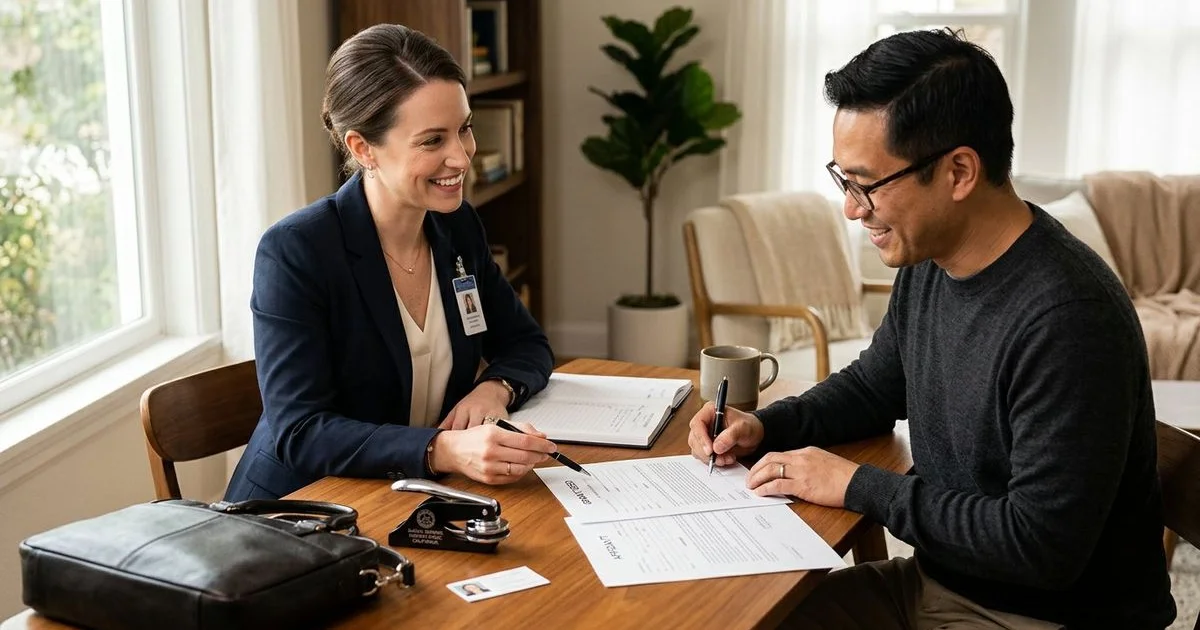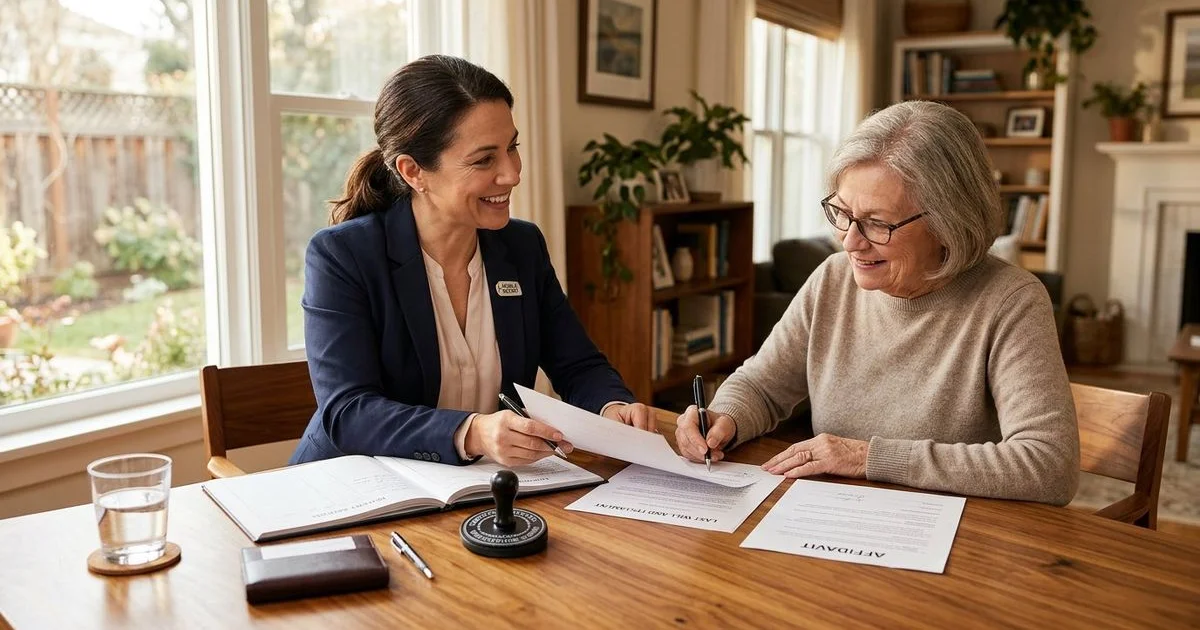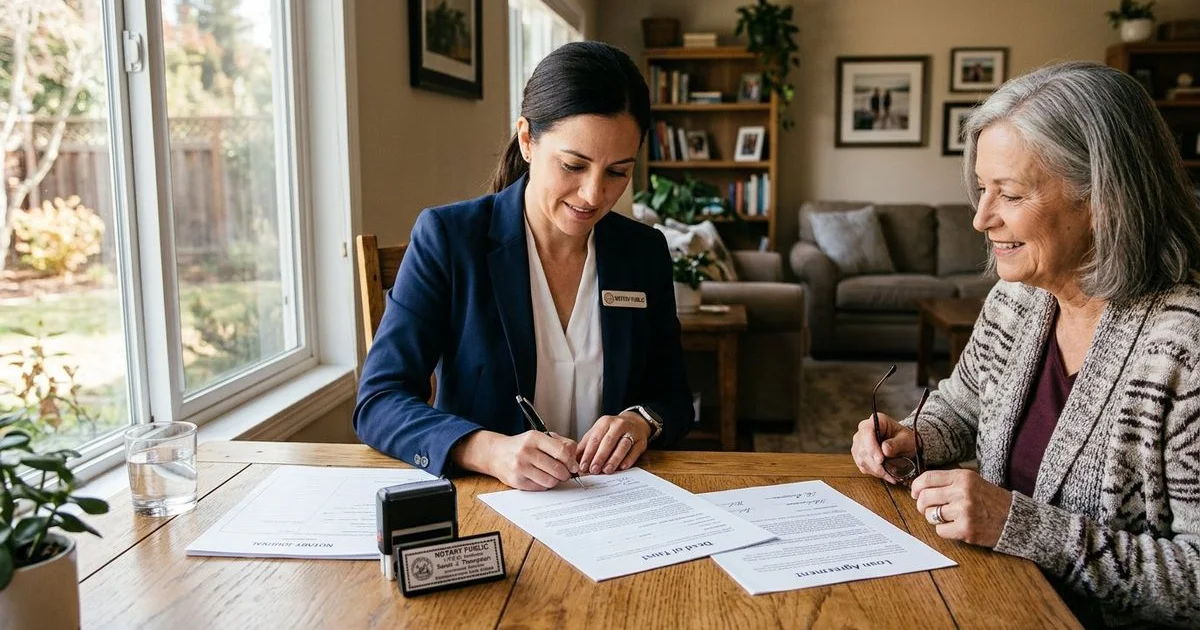
Notarizing Documents for Elderly Parents: What You Need to Know
Guide to getting documents notarized for elderly parents in NC, including hospital and nursing home notarization, signer capacity, and what to prepare.
Portia Burnett
We often see families overwhelmed when trying to manage legal affairs during a health crisis. Catching up on paperwork while a loved one is in the hospital adds unnecessary stress.
We want to share our process, because mastering the topic of notarizing documents for elderly parents: what you need to know prevents future complications.
This guide breaks down the legal requirements, facility protocols, and specific steps to ensure your parent’s estate planning documents are properly executed.
Notarizing Documents for Elderly Parents: What You Need to Know About Signer Capacity
One of the most critical concepts in executing legal documents for elderly individuals is signer capacity. Notaries must make a reasonable assessment that the signer understands the transaction and acts freely. We know that cognitive challenges like Alzheimer’s or dementia do not automatically disqualify someone from signing.
A 2025 study from the National Institutes of Health estimates a 42% lifetime risk of dementia after age 55 in the US. Our experience shows that capacity often fluctuates throughout the day, so a person who experiences evening confusion might be completely lucid after breakfast. This makes scheduling the appointment during their most alert hours incredibly important.
We verify capacity by asking open-ended questions instead of simple yes or no queries. Officials listen carefully to the answers to gauge understanding:
- What is the purpose of the document you are signing today?
- Who are you appointing as your agent or representative?
- What date and day of the week is it?
- Can you explain what authority this paper gives to your family member?
Our protocols require us to decline the request if there are concerns about the signer’s awareness. This refusal protects your family from future legal disputes, because a signature from someone lacking capacity can invalidate the entire document in court.

Hospital and Nursing Home Notarization
Getting documents finalized in a hospital, rehabilitation facility, or nursing home requires careful coordination. Facilities strictly enforce their own policies regarding outside visitors, HIPAA privacy rules, and patient scheduling. We recommend taking a proactive approach to prevent delays.
Following these specific steps will streamline your facility-based appointment:
- Contact the facility administration: Ask the charge nurse about visitor registration, acceptable visiting hours, and any specific protocols for legal professionals.
- Coordinate with the medical team: Medication schedules, physical therapy, and meal times heavily impact patient alertness.
- Secure an appropriate room: The signing process requires a stable surface, good lighting, and privacy to protect confidential information.
- Bring outside witnesses: North Carolina law (N.C.G.S. § 90-321) strictly prohibits attending physicians or facility employees from serving as witnesses for healthcare directives.
- Have paperwork fully prepared: Work with your attorney to complete all text fields before the official arrives.
Our hospital notary service at Thrive Carolina is specifically designed to manage these clinical environments. Experienced notaries treat every client with patience while strictly adhering to state laws.
What to Prepare Before the Appointment
Proper preparation prevents frustrating delays at the signing table. You need to gather specific items and create the right environment for your parent. We always check identification first, as this is the most common stumbling block.
Here is exactly what you need to have ready before the appointment begins:
- Current government-issued identification: North Carolina law (G.S. 10B-3) strictly requires a current, unexpired ID, unlike some states that accept lapsed licenses.
- A credible witness fallback: You must provide a credible witness who personally knows both the signer and the notary to vouch for their identity under oath if your parent’s ID has expired.
- Fully completed documents: Every blank space must be filled in before the appointment begins, as signing incomplete forms invites fraud.
- Qualified independent witnesses: Documents like living wills require two witnesses who are not blood relatives, spouses, or beneficiaries of the estate.
- A distraction-free setting: Turn off the television, mute cell phones, and clear the room of anyone not directly involved in the signing.
Common Documents That Elderly Parents May Need Notarized
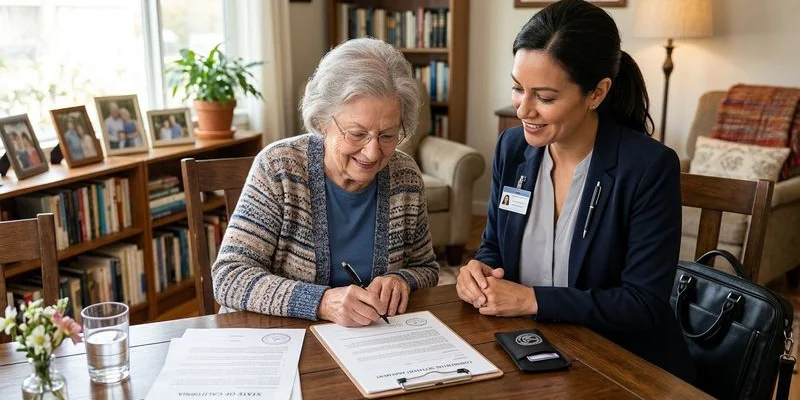
Aging parents typically need a core set of legal instruments to protect their health and assets. Establishing these early gives your family the authority to make critical decisions.
| Feature | Proactive Power of Attorney | Reactive Adult Guardianship |
|---|---|---|
| Cost | Standard notary and attorney fees | $201+ NC filing fee, bonds, and lawyer costs |
| Control | Parent chooses their trusted agent | Judge appoints a guardian |
| Timeline | Immediate execution | Weeks or months of court proceedings |
We frequently help families execute these specific documents:
- Durable Power of Attorney: This instrument allows a trusted person to manage bank accounts, small business operations, and real estate property if the parent loses capacity.
- Healthcare Power of Attorney: This designates an agent to make medical decisions when the parent cannot communicate with doctors.
- Advance Directive for a Natural Death: This living will states the parent’s exact wishes regarding life-sustaining treatments and ventilators.
- Deed or Property Transfer Documents: Transferring family homes or commercial real estate requires a notarized deed recorded with the county Register of Deeds.
- Affidavits and Sworn Statements: Various legal proceedings, including tax or insurance claims, require formal sworn statements.
Review our estate planning checklist for North Carolina residents for a complete overview of these essential forms.
Signs That You Should Act Now
Waiting too long to address estate planning is a common mistake families make. The window for executing legal documents permanently closes once a person loses cognitive capacity. We urge families to look at the data. The Alzheimer’s Association reports that about 1 in 9 Americans age 65 and older currently lives with Alzheimer’s.
Our team strongly recommends scheduling a signing appointment immediately if you notice any of these warning signs:
- A recent diagnosis of progressive cognitive decline or early-stage dementia.
- A sudden health scare, major surgery, or extended hospital stay.
- Missing foundational documents like a financial power of attorney or living will.
- Outdated forms that list deceased executors or former spouses.
- An upcoming transition to an assisted living facility or memory care unit.

We Understand the Sensitivity
Handling these legal matters involves emotional family dynamics and difficult conversations about the future. We recognize at Thrive Carolina Mobile Notary and Apostille Services that this is much more than a simple business transaction. Deep empathy, patience, and strict professionalism are standard for every appointment.
Our team provides mobile notary services throughout the state, including hospital and facility notarization and specialized estate planning notarization. Whether your parent is comfortable at home or receiving care in a clinical setting, mobile professionals come directly to you. Do not wait until a medical crisis removes your parent’s ability to choose. We hope this guide on notarizing documents for elderly parents: what you need to know gives you the confidence to take action. Secure your family’s legal foundation and Contact Thrive Carolina today.