
Estate Planning Checklist for North Carolina Residents
A comprehensive checklist of estate planning documents every NC resident should have. Includes wills, trusts, POA, healthcare directives, and more.
Portia Burnett
We regularly see successful homeowners and business owners leave their life’s work exposed simply because they have not formalized their wishes. This lack of preparation often creates unnecessary court battles and financial stress for grieving families. An Estate Planning Checklist for North Carolina Residents is the most effective tool to prevent these avoidable crises.
Our professional service team at Thrive Carolina Mobile Notary and Apostille Services helps families secure their legacy through our estate planning notarization services. These legal documents establish clear boundaries and directives for your assets.
Let us examine the exact paperwork required to protect your family and how to execute it properly.
Essential Estate Planning Documents
1. Last Will and Testament
A will serves as the foundation for distributing your assets and naming guardians for your children. Recent 2026 data from Caring.com reveals that 60% of Americans currently do not have a will in place. We consider this a dangerous oversight for property owners.
Without this document, North Carolina’s intestacy laws (N.C. Gen. Stat. Section 29-14) take over your estate. These rigid state formulas rarely match what families actually want. For example, if you pass away leaving a spouse and two children, your spouse does not inherit everything.
They only receive the first $60,000 of your personal property and a one-third share of the remaining assets. Our experience shows that relying on state law often forces surviving spouses to sell family homes or businesses just to satisfy the legal inheritance of their own children.
A properly executed will allows you to:
- Designate specific guardians for your minor children.
- Name a trusted executor to manage the probate process.
- Direct exactly how your assets are divided among heirs.
- Outline your preferences for funeral and burial arrangements.
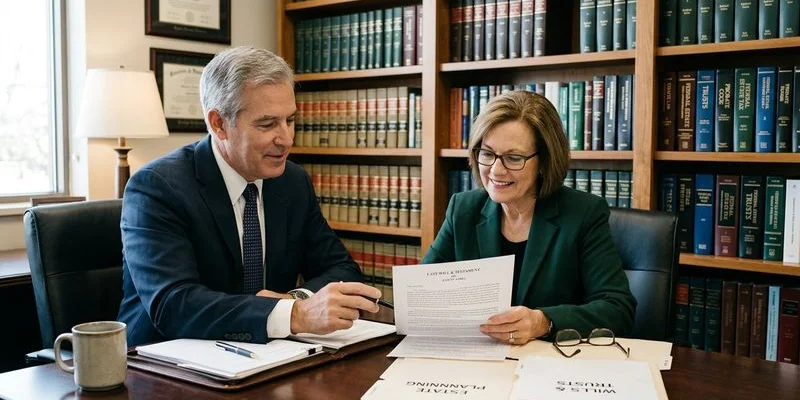
In North Carolina, two competent witnesses must watch you sign the document and then sign it themselves. We strongly recommend attaching a notarized self-proving affidavit to the will. This specific addition allows the probate court to accept the document immediately without tracking down your original witnesses years later.
2. Durable Power of Attorney
A durable power of attorney authorizes a trusted individual to manage your financial accounts if you become incapacitated. This legal designation falls under North Carolina General Statute Chapter 32C, which adopted the Uniform Power of Attorney Act.
Your designated agent gains the authority to:
- Pay your monthly bills and manage cash flow.
- File your state and federal tax returns.
- Manage complex real estate transactions.
- Oversee your ongoing business interests.
We frequently see families forced into a costly, public guardianship process simply because they skipped this single form. Financial institutions maintain incredibly strict compliance standards for these documents. Many national banks will instantly reject a power of attorney if the notarization contains even a minor technical error.
Our notaries ensure every stamp and signature aligns perfectly with state laws to prevent these delays. You must include specific statutory language stating the document survives your incapacity.
3. Healthcare Power of Attorney
This document grants a specific person the legal right to make medical choices for you when you cannot speak for yourself. North Carolina law dictates that this form requires your signature, two qualified witnesses, and a proper notarization. We suggest using the official North Carolina Statutory Form Healthcare Power of Attorney to ensure immediate recognition by local hospitals.
Your chosen representative must understand your personal values and feel comfortable advocating for you in high-stress situations. Medical staff will look directly to this agent during emergencies.
Our clients often name a spouse or adult child as their primary decision-maker. You should always name at least one backup agent in case your primary choice is unreachable.
4. Advance Directive for a Natural Death (Living Will)
A living will dictates your exact preferences for life-sustaining treatments during terminal illnesses or advanced dementia. It provides clear, legal instructions to doctors regarding artificial nutrition and hydration.
We encourage families to file this completed document with the North Carolina Secretary of State’s Advance Health Care Directive Registry. This centralized database allows medical providers to access your wishes instantly from any facility in the state for a small $10 filing fee.
The legal requirements demand your signature, two qualified witnesses, and a notary public. Having these instructions finalized removes a massive emotional burden from your family members. You can learn more about how these distinct roles function in our guide on power of attorney vs advance directive.
5. Revocable Living Trust
A revocable living trust completely bypasses the public probate system, offering speed and privacy for your beneficiaries. North Carolina courts charge a probate assessment fee of 0.4% ($4 per $1,000) on estate assets, which caps at $6,000. This fee does not even include the mandatory court filing costs, attorney fees, or executor commissions.
We help business owners use trusts to avoid these unnecessary expenses and keep their financial transfers completely private. Trusts provide massive advantages for blended families or individuals owning property across multiple states.
While the primary trust agreement does not strictly require a notary, the property deeds transferring real estate into the trust absolutely do. Our team handles the notarization of these transfer deeds so you can properly record them with the county Register of Deeds.

| Feature | Last Will and Testament | Revocable Living Trust |
|---|---|---|
| Public Record | Yes, goes through public probate | No, remains completely private |
| Court Fees | Subject to NC 0.4% probate fee | Bypasses state probate fees |
| Effective Date | Only activates after death | Effective immediately upon signing |
Additional Documents to Consider
6. Beneficiary Designations
Many financial accounts transfer outside of your will entirely through direct beneficiary designations. This includes your retirement funds, life insurance policies, and specialized Payable-on-Death (POD) bank accounts.
These direct designations legally override any instructions written in your formal will. We routinely see estates derailed because an individual forgot to update a life insurance policy after a divorce. You must review these named individuals annually to ensure they match your current family structure.
7. HIPAA Authorization
The Health Insurance Portability and Accountability Act establishes strict federal privacy barriers around your medical records. Hospitals face massive fines for unauthorized disclosures, making them extremely cautious about sharing patient updates.
Without a signed HIPAA authorization, doctors may legally refuse to discuss your condition with your own children during an emergency. We provide notarization for these simple release forms to close a critical gap in your emergency planning.
8. Digital Estate Plan
Modern asset protection must account for your online life, from cryptocurrency wallets to cloud storage accounts. North Carolina adopted the Revised Uniform Fiduciary Access to Digital Assets Act (Chapter 36F) to address this exact issue.
This specific law allows your appointed executor to legally access and manage your digital accounts after you pass. We advise clients to formally grant their executor access to the following critical platforms:
- Primary email accounts used for banking communication.
- Investment portals and cryptocurrency wallets.
- Cloud storage drives containing family photos or business files.
- Revenue-generating social media profiles or websites.
You must explicitly outline how you want these digital assets handled in your official documents.
9. Letter of Intent
A letter of intent acts as a practical instruction manual for your surviving family members. This document holds no legal weight, but it provides vital day-to-day guidance for the people closing out your life.
You should use this letter to list the exact locations of safe deposit box keys, unwritten funeral preferences, and contact details for your CPA. Our professionals recommend keeping this letter with your official estate binders so everything remains centralized.
Executing Your Estate Planning Checklist for North Carolina Residents
Executing a comprehensive strategy requires systematic organization. We structured the following action plan to help you finalize these critical forms. Follow these exact steps to complete the process.
| Planning Phase | Specific Action Required | Strategic Benefit |
|---|---|---|
| 1. Assessment | Inventory all physical and digital assets. | Prevents hidden accounts from being surrendered to the state. |
| 2. Delegation | Select an executor and healthcare agents. | Puts trusted individuals in charge instead of court appointees. |
| 3. Legal Drafting | Consult a North Carolina attorney. | Ensures documents comply with current state statutes. |
| 4. Execution | Schedule mobile notary services. | Validates the paperwork to prevent institutional rejection. |
| 5. Storage | Secure originals in a fireproof safe. | Guarantees immediate access during a sudden medical crisis. |
| 6. Maintenance | Review the plan every three years. | Adapts your strategy to new tax laws and family changes. |

Get Your Documents Notarized Correctly
Finalizing your Estate Planning Checklist for North Carolina Residents requires precise, legally compliant execution.
An unnotarized or improperly witnessed document offers no protection when your family actually needs it.
We deliver convenient, professional estate planning notarization services directly to your location. Dedicated professionals will travel to your home, an attorney’s office, or provide specialized hospital notary services for patients in care facilities.
Do not leave your legacy vulnerable to legal technicalities.
Contact Thrive Carolina Mobile Notary and Apostille Services today to finalize your paperwork and secure your family’s future.